

Key Takeaways
What Is Niacinamide? The Vitamin B3 Behind the Hype
Niacinamide, also called nicotinamide, is a water-soluble form of vitamin B3. Your skin can't produce it on its own, so applying it topically through a face serum is the most direct way to get it where it matters.
Unlike harsher actives, niacinamide doesn't exfoliate or peel. It works quietly inside the skin: helping regulate oil production in the sebaceous glands, supporting the lipids that maintain a healthy skin barrier, and slowing the transfer of pigment that causes dark spots.
That gentle mechanism is exactly why it became the default first serum recommendation worldwide. It delivers real, measurable change without the redness and peeling that scare beginners away from skincare.
One quick clarification on the word "serum" itself. In skincare, a serum is simply a lightweight liquid with a high concentration of active ingredients, designed to absorb deeper than a moisturizer. It has nothing to do with blood serum, despite sharing the name.
Why Niacinamide Works So Well for Pakistani Skin
Most skincare advice online is written for cold, dry Western climates. Pakistan is a different battlefield: 40°C summers, 80% humidity on the coast, intense UV nearly year-round, and dust that clogs pores by lunchtime. Niacinamide happens to address almost every one of those skin concerns.
Oil Control in Karachi and Lahore Humidity
Humidity makes oily skin worse. Your sebaceous glands respond to heat, and the moisture in the air stops sweat and sebum from evaporating, leaving a greasy film on your face by mid-morning.
This is where the research is genuinely strong. Well-documented clinical studies found that a 2% niacinamide formulation measurably reduced excess sebum within two to four weeks of use. That makes it one of the very few ingredients with published evidence that it can genuinely control oil, not just marketing claims.
For anyone in Karachi who blots their face three times a day, or in Lahore where summer turns every commute into a sauna, that sebum regulation is the difference between makeup sliding off at 11 a.m. and a face that stays matte until evening.
Minimizes Pores and Smooths Skin Texture
Pores look larger when they're stretched by oil and debris. Because niacinamide reduces the oil production feeding them, the appearance of pores shrinks over time. Skin texture becomes noticeably smoother, usually within eight weeks.
To be precise: no ingredient physically closes a pore. Niacinamide minimizes pores by keeping them clearer and less distended, which is what actually changes how your skin looks in the mirror and in photos. Used consistently, it's also one of the simplest ways to improve texture without resorting to exfoliating acids.
Fades Dark Spots, Acne Marks and Uneven Skin Tone
Pakistani skin tends to sit in the medium-to-deep range on the Fitzpatrick scale, which means it produces more melanin in response to inflammation. Every pimple leaves a mark, and those marks linger for months. Dermatologists call this post-inflammatory hyperpigmentation, and it's the top complaint Siora hears from customers with acne-prone skin.
Niacinamide helps by interrupting the transfer of melanin to the skin's surface. Published research on 5% niacinamide showed visible reduction in hyperpigmentation and dark spots within four weeks. The result is a gradual, even fade rather than the patchy lightening you risk with aggressive bleaching creams still sold in many Pakistani markets.
If stubborn pigmentation is your main concern rather than oil, a dedicated treatment like Siora's tone-correction and brightening serum targets uneven skin tone more directly, and the two can be used on alternate nights.
Gentle on Sensitive Skin: Calms Redness and Strengthens the Barrier
Niacinamide boosts ceramide production, the lipids that hold your skin barrier together. A stronger barrier means less water loss, less sensitivity to heat and dust, and less of the redness that flares up after a day in the Pakistani sun.
This barrier support is also why niacinamide is one of the few actives recommended even for sensitive skin. It tends to calm irritation rather than cause it.
Niacinamide vs Vitamin C: Which Serum Do You Need?
This is the most common question Siora's support team gets, so here's the honest comparison. Both are excellent; they just solve different problems.
| Niacinamide | Vitamin C | |
|---|---|---|
| Best for | Oily skin, large pores, acne marks, redness | Dullness, sun damage, radiance, early signs of aging |
| Main action | Regulates oil, repairs barrier, evens tone | Antioxidant protection, helps brighten skin, supports collagen |
| Best time to apply | Morning or night | Morning, under sunscreen |
| Irritation risk | Very low | Low to moderate (depends on form and pH) |
| Stability in PK heat | Very stable | Degrades faster; store away from sunlight |
| Results timeline | 4–8 weeks | 4–12 weeks |
The old myth that you can't combine them has been thoroughly debunked. Modern formulations work fine together. A simple approach: vitamin C serum in the morning for antioxidant protection and a brighter complexion, niacinamide at night for oil control and repair.
If you're choosing just one and you live anywhere hot and humid in Pakistan, start with niacinamide; for oil, pores and acne marks it's simply the best serum for the job, because it fixes the problems our climate creates. Add vitamin C later, when dullness and restoring skin radiance become your priority.
How to Choose the Best Niacinamide Serum for Oily Skin in Pakistan
More is not better with niacinamide. The concentration of niacinamide on the bottle matters less than most marketing suggests, and going too high too fast is the number one cause of complaints.
| Concentration | Who it suits | What to expect |
|---|---|---|
| 2–4% | Sensitive skin, first-time users, teenagers | Gentle oil regulation, barrier support, minimal risk |
| 5% | Most skin types, including mature skin; the evidence-backed sweet spot | Proven fading of dark spots and oil control with very low irritation |
| 10% | Experienced users with very oily and acne-prone skin | Faster visible results on pores and marks; slightly higher chance of flushing |
| Above 10% | Rarely necessary for anyone | No solid evidence of better results; more irritation for nothing |
You'll notice formulas like Niacinamide 10% + Zinc 1% everywhere. The Ordinary Niacinamide 10% + Zinc 1% is the imported benchmark most Pakistani shoppers compare everything against, and local brands have copied the formula widely. The zinc PCA adds extra oil absorption, making this style of niacinamide serum for oily skin especially suitable for oily and acne-prone types, though it can feel drying on combination or normal skin.
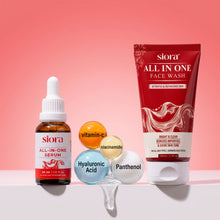
Beyond percentage, check the supporting cast on the ingredient list. Glycerin and hyaluronic acid add hydration so the formula doesn't feel tight. Siora's formulation team paired niacinamide with zinc and humectants specifically for Pakistani weather: enough to balance oil through the humid months, enough hydration that it doesn't strip skin when winter dries Lahore and Islamabad out.
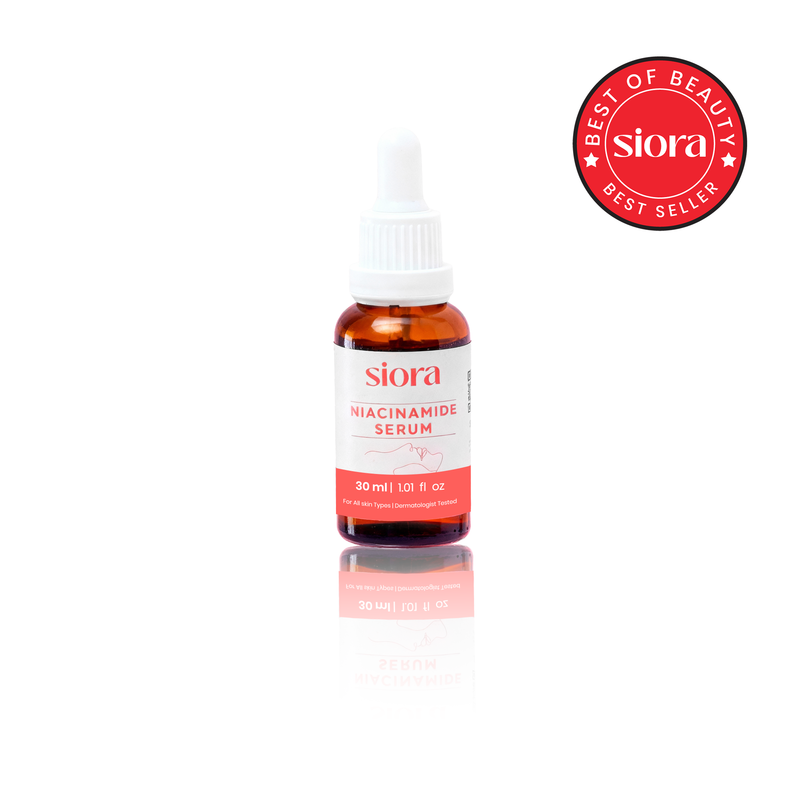
The Siora Niacinamide Serum ships nationwide, and like everything in the Siora serum collection is available with cash on delivery, because we know most Pakistani shoppers still prefer to pay at the door.
What's inside: the formula contains niacinamide as the star active on a straightforward INCI list. Aqua, purified water, forms the base that carries the actives into the skin. Phenoxyethanol, a widely used preservative, keeps the bottle stable and free of microbial growth through its shelf life.
What Customer Reviews Actually Tell You
When hunting for the best niacinamide serum in Pakistan, read customer reviews for patterns, not star counts. Look for mentions of texture (sticky formulas are a red flag in our humidity), how long a bottle lasts, and whether reviewers with your skin type saw changes by week six. A wall of vague five-star reviews posted on the same day tells you more about the seller than the serum.
How to Use Niacinamide Serum: Step-by-Step Routine
A face serum only works if it's applied correctly, inside a consistent skin care routine. Here's the complete sequence:
- Cleanse. Wash with a gentle cleanser, morning and night. Skip harsh soaps; they damage the barrier niacinamide is trying to rebuild.
- Apply to slightly damp skin. Two to three drops of niacinamide serum, pressed over the whole face and neck. Don't rub aggressively.
- Layer hydration. If your skin runs dry, follow with a hyaluronic acid serum before your moisturizer.
- Moisturizer. Seal everything in. Oily skin can use a gel moisturizer; dry skin needs a cream.
- Sunscreen every morning, no exceptions. The Pakistani sun will undo every rupee you spend on serums. Pigmentation fading without daily SPF is fighting a fire while pouring petrol on it. Our sunblock guide for Pakistan covers how to pick one that doesn't leave a white cast on medium skin tones.
Start with once daily for the first two weeks, then move to twice daily if your skin is happy. Consistency beats intensity: a 5% serum used every day will outperform a 10% serum used whenever you remember.
Expect a realistic timeline. Oil control shows up first, around weeks two to four. Pore appearance and texture improve by week eight. Acne marks and pigmentation are the slowest, often needing ten to twelve weeks of daily use.
Can You Use Hyaluronic Acid and Niacinamide Together?
Yes, and it's one of the easiest pairings in skincare. Using hyaluronic acid and niacinamide together covers both halves of the job: the hyaluronic acid pulls water into the skin while niacinamide keeps it locked behind a stronger barrier and continues to control oil. Apply the niacinamide first, follow with hyaluronic acid, then seal with moisturizer. There's no waiting time needed between the two layers.
Side Effects: Who Should Be Careful with Niacinamide
Niacinamide is one of the safest actives in skincare, but a few caveats are worth knowing.
Some users experience temporary flushing or mild redness with 10% formulas, especially on a freshly washed face. Dropping to a lower concentration or applying over moisturizer usually solves it. True allergic reactions are rare.
You may have heard about "niacinamide purging." That's a myth. Niacinamide doesn't speed up cell turnover, so it can't purge. If you get a breakout after starting a new serum, suspect another ingredient in the formula, or simple coincidence.
Be more cautious if you:
- Have very reactive or eczema-prone sensitive skin: start at a low percentage, twice a week.
- Are already using prescription treatments like tretinoin or benzoyl peroxide: introduce one product at a time and give each two weeks.
- Have never used the product before: do a patch test on your inner forearm or behind the ear for 24 hours. It takes one minute and saves a week of misery.
If a serum causes persistent stinging or irritation beyond the first few uses, stop and see a dermatologist rather than pushing through.
Where Niacinamide Fits in a Complete Serum Routine
Think of your routine as a team where each skin serum has one job. Niacinamide is the reliable all-rounder you build around:
- Morning: cleanser → vitamin C → moisturizer → sunscreen. Vitamin C defends against UV-driven dullness through the day.
- Night: cleanser → niacinamide → hyaluronic acid (if needed) → moisturizer. Night is repair time, which is niacinamide's home ground.
- Targeted extras: a brightening treatment for stubborn pigmentation, used two to three nights a week instead of, not on top of, your other actives.
Once your skin is comfortable with niacinamide for three months or more, retinol is the logical next step for fine lines and other signs of aging. It's a stronger commitment with its own rules, which we've covered in our full retinol serum guide for Pakistan. Niacinamide actually makes that transition easier, because the barrier it builds reduces retinol's trademark irritation.
The pattern across all of this: improve skin gradually, one active at a time, with sunscreen as the non-negotiable foundation. Overall skin health comes from boring consistency, not a shelf of twelve half-used bottles.