

Key Takeaways
Does Vitamin C Serum Help With Acne? What the Serum Helps and What It Does Not
It helps acne-prone skin, and it does not clear acne. Those are two different claims, and most pages blur them. A vitamin C serum does three useful things for skin that breaks out. It fades acne marks, the dark and red spots a pimple leaves behind, because vitamin C slows melanin production and helps lift the pigment already there. It helps reduce redness around healing spots through vitamin C's anti-inflammatory properties. And it supports the skin barrier and collagen production, so the acne products you use at night irritate less and skin stays healthy while it recovers.
What it does not do in most forms is unclog pores or reduce the bacteria that drive breakouts, and it does nothing for hormonal acne at the source. That job belongs to salicylic acid, benzoyl peroxide and niacinamide.
The evidence is worth stating precisely, because it gets stretched. One form, sodium ascorbyl phosphate, has been tested on dark spots and acne together: in a 12-week study of 50 people, 61% using a 5% lotion saw significant improvement against a control group, and an 8-week study of 30 people found 48.8% fewer lesions. That is real evidence, for that form at that strength. Many vitamin C serums, including the Siora Vitamin C Serum, use a different derivative. The fair claim for those is support for acne-prone skin, not treatment of acne. For the brightening and anti-aging side of the ingredient, read vitamin C serum benefits.
Potential Side Effects: Can Vitamin C Serum Cause Breakouts or Make Acne Worse?
The ingredient does not cause acne. Four things around it can, and each one has a fix.
- Low-pH pure vitamin C: L-ascorbic acid at 10% to 20% sits at a pH near 3 so it can absorb. If your skin is sensitive or acne-prone, that acidity can cause stinging and small red bumps that look like breakouts but are irritation. Irritation is not acne. Switch to a gentle vitamin C serum built on a derivative instead.
- Oxidised product: vitamin C that has turned orange or brown has degraded. Oxidised vitamin C irritates skin and does nothing for it. Pakistani heat speeds this up. Keep it away from light and heat, cap it tightly, and replace it when the colour changes.
- A pore-clogging base: the vitamin C is rarely the problem. The carrier is. Heavy oils, thick silicones and fragrance block pores. A water-based, oil-free, non-comedogenic formula removes this cause entirely.
- Stacking it with strong acids: vitamin C, salicylic acid and glycolic acid in one skincare routine overwhelm acne-prone skin, and the irritation gets blamed on whichever product you added last.
One more thing needs saying clearly, because it is repeated everywhere and it is wrong: vitamin C does not cause purging. Purging happens with ingredients that speed up cell turnover, retinol and exfoliating acids, which push existing clogs to the surface faster. Vitamin C is an antioxidant that neutralises free radicals. It does not change turnover. Breakouts in the first two weeks of a new vitamin C serum are irritation or a clogging base, and waiting it out is the wrong advice. Change the form or the formula.
Which Form of Vitamin C Works for Acne Prone Skin?
The form matters more than the vitamin C concentration. A stable, easily absorbed form of vitamin C at 10% will do more for acne-prone skin than pure vitamin C at 20% that stings, oxidises and gets abandoned by week three.
| Form of vitamin C | Stability in heat | Irritation risk | Evidence on acne | Best for |
|---|---|---|---|---|
| L-ascorbic acid (pure vitamin C) | Low, oxidises fast | Moderate to high at low pH | None on acne | Resilient skin chasing fast brightening |
| Sodium ascorbyl phosphate | High | Low | Two trials at 5%, both positive | Active acne with oily skin |
| Ethyl ascorbic acid | High | Low | None on acne; strong on pigmentation | Acne marks and uneven tone on oily or acne-prone skin |
| Ascorbyl glucoside | High | Very low | None on acne | Sensitive skin, very gentle brightening |
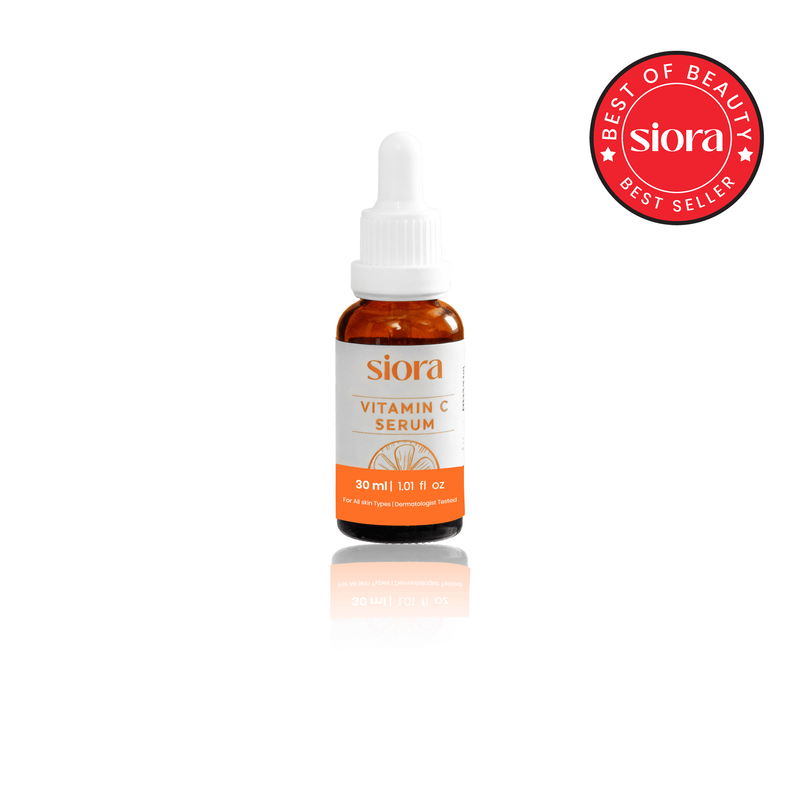
The Siora Vitamin C Serum uses 15% ethyl ascorbic acid, a stable form of vitamin C that holds up in heat and works at a skin-friendly pH. It is non-comedogenic, oil free and fragrance free, suitable for all skin types, and built for the marks and uneven skin tone acne leaves behind rather than for active breakouts. That distinction is the point of this article.
Using a Vitamin C Brightening Serum on Oily and Acne-Prone Skin: What to Look For
A vitamin C serum for oily skin has to clear six checks before the percentage matters, whatever your skin type.
- Water-based and oil free: the texture should disappear into skin within a minute and leave nothing behind.
- Non-comedogenic on the label: if the brand will not print it, assume the base has not been tested for it.
- A stable derivative, not pure L-ascorbic acid: ethyl ascorbic acid or sodium ascorbyl phosphate for acne-prone skin.
- Fragrance free: fragrance is the most common irritant in skincare products, and irritated skin breaks out more.
- Niacinamide in the same formula: it controls oil and strengthens the barrier, and the claim that it conflicts with vitamin C is a myth from 1960s lab conditions that do not exist on skin. Vitamin E is a bonus for antioxidant support.
- Light enough to sit under sunscreen: in humidity, a serum that pills under SPF gets skipped, and a skipped serum does nothing.
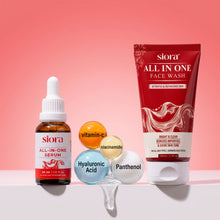
The Siora Vitamin C Serum (Brighten, Protect) clears all six. It pairs 15% ethyl ascorbic acid with niacinamide, hyaluronic acid and panthenol, it is labelled non-comedogenic and fragrance free, and it is safe for oily and combination skin. It is Rs 990.
Can Vitamin C Serum Fade Acne Scars and Brighten Dark Marks?
Yes for flat marks, no for pitted scars. Most of what people call acne scars are post-inflammatory hyperpigmentation: a flat dark spot where a pimple healed and the skin overproduced melanin in that one place. On darker skin tones these marks can outlast the acne by months. Vitamin C works on exactly this. It slows melanin production so the mark stops darkening and helps fade dark spots already there, which is how it evens skin tone over time.
Pitted, raised or rolling scars are structural collagen damage. A serum cannot rebuild that; those need a dermatologist, not a bottle.
Timeline matters. Expect brighter skin at three to four weeks and clearly lighter marks at eight to twelve weeks of consistent use. Regular use is what gets the best results; skipping days resets the clock. Sun exposure is the other half: UV darkens acne marks faster than any serum lightens them, so a vitamin C serum without daily sunscreen is money spent to stand still.
Niacinamide is the other proven option for marks, with the advantage of also controlling the oil that causes new spots; the niacinamide serum guide covers it. The two combine well: vitamin C in the morning, niacinamide at night.
How to Use Vitamin C Serum for Acne: Routine and What Not to Mix
Morning use, on dry skin, under sunscreen. That is the routine. Here is how to apply vitamin C serum to your face without irritating acne-prone skin.
- Cleanse and pat dry. Vitamin C goes on dry skin, not damp skin, so nothing dilutes it.
- Apply two to three drops of vitamin C serum. Press over the whole face, including active spots. It will not make a pimple worse; the only reason to skip an open spot is that it may sting.
- Wait one minute. Let it settle before the next layer.
- Moisturiser if your skin needs it. Oily skin in summer often does not.
- Sunscreen SPF 50+, every morning. Vitamin C is an antioxidant, not a UV filter. Without SPF the marks you are fading get darker.
Can you use vitamin C serum with salicylic acid? Yes, at opposite ends of the day rather than layered at once. Vitamin C in the morning, salicylic acid at night. Layering both in one step causes the irritation people mistake for a reaction to vitamin C. The Anti-Acne Serum guide covers the salicylic acid side of the routine.
| Step | Morning (AM) | Evening (PM) |
|---|---|---|
| 1. Cleanse | Gentle cleanser, pat dry | Anti Acne Face Wash or gentle cleanser, pat dry |
| 2. Treat | Vitamin C Serum, two to three drops, wait a minute | Anti Acne Serum (salicylic acid 2%), two to three drops |
| 3. Moisturise | Light gel moisturiser if needed | Light moisturiser |
| 4. Protect | Sunscreen SPF 50+, always | Not needed |
What not to use with vitamin C serum on acne-prone skin: benzoyl peroxide in the same step, because it oxidises vitamin C on contact; more than one exfoliating acid in the same routine; and retinol in the same slot, which belongs at night for its anti-aging work. Vitamin C does not make skin more sensitive to the sun. Retinol and exfoliating acids do. For how benzoyl peroxide compares with salicylic acid, see salicylic acid vs benzoyl peroxide. Once daily in the morning is enough; twice adds irritation without results. Patch test on the jaw for two days if you have reactive skin.
Which Vitamin C Serum in Pakistan Should Acne-Prone Skin Use?
Pick by what your skin is doing right now, not by what the bottle promises.
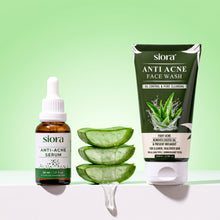
- Active breakouts, whiteheads, oily congestion: not a vitamin C serum. The Anti Acne Serum (Clear, Calm, Control), with salicylic acid 2%, niacinamide 5%, tea tree and zinc PCA, is built for this. Rs 1,290, used at night.
- Dark marks and uneven tone after the acne has calmed: the Vitamin C Serum in the morning. Rs 990. This is its job.
- Both at once, which is the most common situation: Vitamin C Serum in the morning, Anti Acne Serum at night. They do not conflict and they cover opposite halves of the problem.
- Marks only, routine pre-built: the Acne Marks & Spots Repair Combo at Rs 1,590, which is niacinamide-led rather than vitamin C.
Comparing vitamin C serums in Pakistan for acne-prone skin, be suspicious of any bottle that promises to clear acne. The honest ones promise glowing skin, a more even skin tone and fewer marks in eight to twelve weeks with daily use and daily sunscreen. Browse all face serums by skin concern to compare.