

Key Takeaways
Why Pakistan's UV Index Demands Daily Sun Protection
Most of us treat sunblock as a beach product. The numbers say otherwise.
From April through September, the UV index across Punjab and Sindh routinely reaches 9 to 11. Karachi sits at 9–11 through its long summer, Lahore peaks at 10–11 in May and June, and even Islamabad, with its milder reputation, hits 8–10. On the World Health Organization's scale, anything above 8 is "very high" and 11 is "extreme", meaning unprotected skin can burn in under 15 minutes.
Decades of dermatology research consistently show that ultraviolet exposure is the primary driver of visible skin aging, responsible for the majority of wrinkles, dark spots, and loss of firmness we usually blame on age alone. This process, called photoaging, happens slowly and invisibly. UVA rays penetrate deep into the skin and break down collagen; UVB rays burn the surface and cause sunburn. Both contribute to skin cancer risk over a lifetime of sun exposure.
There's a persistent myth that brown skin doesn't need sun protection. Melanin does offer some natural defense, but it doesn't block UV rays completely, and it does nothing to prevent the hyperpigmentation that South Asian skin is especially prone to. If you struggle with dark spots, melasma, or uneven tone, harmful UV rays are almost certainly making it worse every single day you go unprotected.
The fix costs less than a single facial: a high-quality sunblock, worn daily.
Sunscreen vs Sunblock: What's the Difference?
In Pakistan, "sunblock" is the everyday word and "sunscreen" sounds imported. Technically, they describe two different mechanisms:
- Sunblock (physical/mineral): uses mineral UV filters like zinc oxide and titanium dioxide that sit on the skin's surface and reflect or scatter UV radiation. It starts working immediately and rarely irritates, which makes it ideal for sensitive skin. The trade-off is texture: thick mineral formulas can leave a visible white cast, especially noticeable on brown skin tones.
- Sunscreen (chemical): uses organic UV filters (like avobenzone or newer-generation filters) that absorb ultraviolet radiation and convert it to heat. Chemical sunscreens tend to be lighter and invisible on skin, but they need 15–20 minutes to become effective and can sting reactive skin or the eye area.
Here's the honest answer to the sunscreen vs sunblock debate: neither is "better". What matters is that the product is broad-spectrum, meaning it protects against both UVA and UVB rays, and that you actually enjoy wearing it every day. A perfect formula sitting unused in your drawer protects nothing. Many modern formulas, including hybrid tinted ones, combine both approaches to get mineral safety with a wearable finish.
One label to check: the PA rating (PA+ to PA++++) measures UVA protection specifically. Since those longer wavelengths drive premature aging and pigmentation, a PA+++ or higher rating matters just as much as the SPF number for Pakistani skin concerns.
SPF 30 vs SPF 50 vs SPF 60: What the Numbers Actually Mean
SPF measures how well a product filters UVB, the wavelengths responsible for sunburn. The scale is not linear, which is why the marketing around big numbers is misleading:
| SPF rating | UVB blocked | UVB reaching skin | Best suited for |
|---|---|---|---|
| SPF 30 | ~96.7% | 1 in 30 rays | Short errands, mostly indoor days, winter in northern cities |
| SPF 50 | ~98% | 1 in 50 rays | Daily wear in Pakistan's UV 9–11 summers; the dermatologist-standard choice |
| SPF 60 | ~98.3% | 1 in 60 rays | Extended outdoor exposure; marginal gain over 50 |
Notice the gap: SPF 50 blocks 98% of UVB, and 60 manages 98.3%. That 0.3% difference is far smaller than the difference made by applying enough product and reapplying on time. Is a 50-rated formula too strong for the face? Not at all. It's the standard daily recommendation for high-UV climates like ours, and perfectly fine for everyday use. SPF 60 isn't "too strong" either; it's just not meaningfully stronger.
Given Karachi and Lahore's summer extremes, 50 is the sensible floor when selecting the best daily formula. Below SPF 30, you're mostly buying false confidence.
How to Choose the Best Sunblock in Pakistan for Your Skin Type
The reason most people abandon sunscreen isn't laziness. It's that they bought the wrong texture for their skin, hated how it felt in 40°C humidity, and quietly gave up. Match the formula to your skin and the habit sticks.
Oily and Acne-Prone Skin
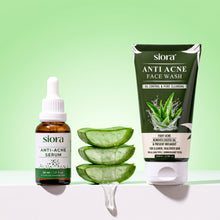
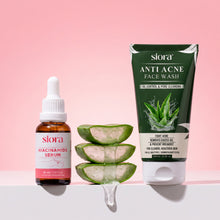
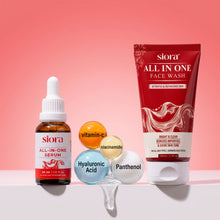
In Karachi's humidity or a Lahore June, a greasy sunscreen feels unbearable by noon. The best sunblock for oily skin is a lightweight gel or fluid with a matte finish, labelled non-comedogenic so it won't clog pores. Avoid heavy creams and anything with a "dewy glow" claim; your skin will produce that glow on its own by 11am. A matte formula actually doubles as a primer to keep your skin shine-free through the day. If oil is a constant battle, pairing your morning SPF with a niacinamide serum for oil control and pore refinement underneath helps regulate sebum over time.
Dry Skin
Dry skin needs the opposite: a sunblock cream with hydrating ingredients like hyaluronic acid, glycerin, or ceramides. Gel textures can leave dry skin feeling tight and flaky, and SPF applied over flaky patches looks patchy too, which makes a richer cream the better sunblock for dry skin. Apply moisturizer first, wait two or three minutes, then layer your sunscreen on top.
Sensitive Skin
Mineral filters, zinc oxide and titanium dioxide, are the gentlest option for reactive or easily irritated skin, including skin recovering from acne treatments. Look for fragrance-free formulas with a short ingredient list. If chemical sunscreens sting your eyes or cheeks, switch to a mineral or hybrid formula.
Combination Skin
Most Pakistani skin falls here: an oily T-zone with normal-to-dry cheeks. A lightweight lotion or a tinted hybrid with a soft matte finish handles both zones without overcorrecting either.
The White Cast Problem (and the Fix)
This deserves its own section because it's the number one complaint about sunblocks in Pakistan. Traditional mineral formulas were developed and tested on lighter skin, so on wheatish and brown tones they leave a grey, ghostly film. The fix is a tinted mineral or hybrid formula, where iron oxides neutralize the white cast and add incidental protection against visible light, which research links to pigmentation in deeper skin tones.
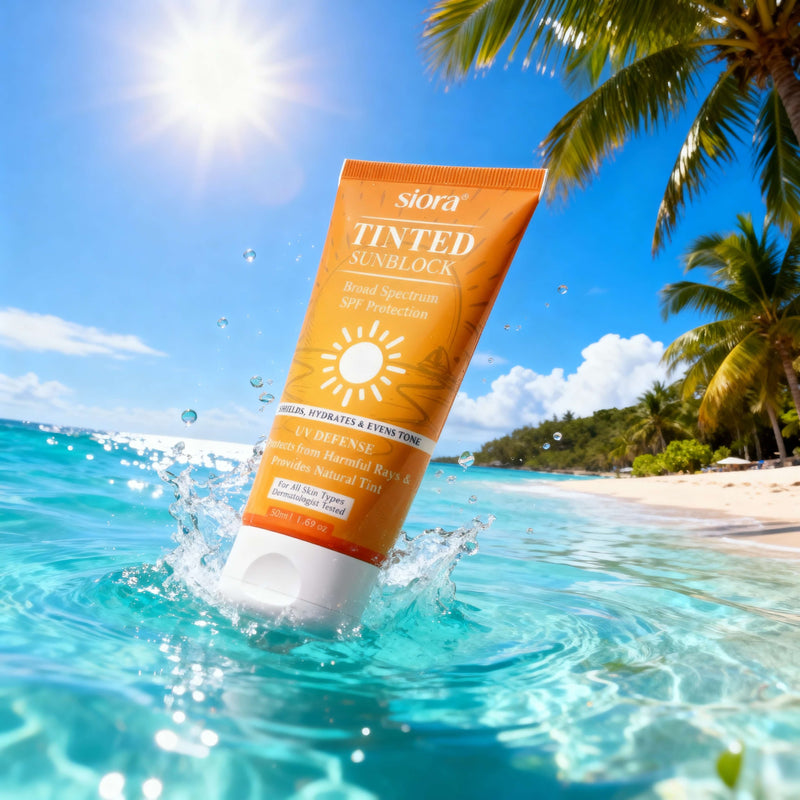
Siora's Tinted Sun Block SPF 50 PA+++ was built around exactly this problem: Siora's formulation team developed the tint specifically for Pakistani skin tones, so it blends invisibly with a matte finish instead of sitting on top of your skin. At Rs 1,490 with cash on delivery available nationwide, it's positioned at an affordable price compared to imports that cross Rs 4,000 after the recent duty hikes, and you don't have to gamble on expiry dates from grey-market sellers. If you're comparing the average sunblock price in Pakistan, the realistic range for a legitimate high-SPF formula runs from about Rs 1,200 to Rs 4,500; a higher price past that point buys packaging, not protection. And if you'd rather buy the best sunscreen in Pakistan without pharmacy-counter guesswork, ordering your sunblock online directly from the brand guarantees fresh stock and cash on delivery.
How Much Sunblock to Apply (and When to Reapply)
Most people apply a quarter to half of the amount used in SPF testing, which means your "SPF 50" might be performing like an SPF 15 on your face. Quantity is everything.
- Use the two-finger rule. Squeeze a line of product along the full length of your index and middle fingers. That's the correct dose for your face and neck, roughly half a teaspoon. It will feel like too much. It isn't.
- Apply as the last step of skincare. Cleanser, serum, moisturizer, then sunblock. Dot it across your forehead, cheeks, nose, chin, and neck, then spread evenly. Don't forget your ears and the back of your neck.
- Wait before makeup or leaving home. Give it 10–15 minutes to set. Chemical filters need this time to become effective; mineral formulas need it to stop moving around.
- Reapply every 2–3 hours outdoors. Sweat, humidity, and touching your face all degrade the protective film. If you're commuting in an un-airconditioned bus or rickshaw in June, you're sweating off SPF faster than the label assumes.
- Reapply after swimming or heavy sweating, even with water-resistant formulas. "Water-resistant" means 40–80 minutes of protection in water, not all day.
- Indoors at a desk away from windows? Your morning application can stretch longer. Next to a sunny window, reapply at lunch, since glass doesn't stop the aging wavelengths.
One more rule: sunblock expires. An opened tube lasts about 12 months; if it separates or smells off, replace it.
Can You Wear Sunblock with Makeup?
Yes, and you should, because the SPF 15 in your foundation is nowhere near enough; you'd need several times a normal application to get the labelled protection.
The working order: skincare, sunscreen, wait 10 minutes, then makeup. A matte-finish sunblock works beautifully as a primer under base products, gripping foundation rather than making it slide. A tinted formula can even replace light base makeup entirely on casual days, evening out tone while you protect your skin from sun damage in one step.
For reapplication over makeup, you have three workable options: an SPF spray or mist, an SPF powder pressed on with a puff, or an SPF cushion compact patted over your base. None match a full fresh layer, but they beat letting protection lapse all day.
Do You Need Sunscreen Indoors or in Winter?
Two myths keep Pakistani skin unprotected for half the year, so let's deal with both.
"I'm indoors all day." Standard window glass blocks most UVB but lets UVA pass through largely unfiltered. If you work beside a window, drive (driver's-side melasma is a documented pattern dermatologists see), or sit in a sunlit room, those aging rays are quietly reaching your skin. They don't cause burning, so there's no warning sign; they just accelerate premature aging and pigmentation in the background.
"It's winter, the sun is weak." Weaker, yes. Gone, no. Lahore and Islamabad winters still register UV index 3–4 on clear days, which crosses the threshold where protection is recommended. Up to 80% of UV rays penetrate cloud cover, so an overcast sky is not protection. And winter sun is sneakier because cooler air removes the heat cue that normally reminds you the sun is working on your skin.
The practical rule: sunblock every morning, every season, rain or shine. The habit is the protection.
Sunblock and Active Ingredients: Retinol, Acids, and Vitamin C
If your routine includes actives, sun protection stops being a recommendation and becomes a requirement.
Retinol increases cell turnover, which leaves fresh skin more vulnerable to UV damage. Using retinol at night without sunscreen in the morning doesn't just slow your progress; it can actively worsen the pigmentation you're trying to fix. If you're on retinol, daily SPF 50 is non-negotiable. Our retinol serum guide for Pakistan covers how to sequence the two safely.
Exfoliating acids (AHAs like glycolic and lactic acid) thin the dead surface layer that provides minor natural UV buffering. Same rule: morning SPF, no exceptions, including for two or three days after you stop using them.
Vitamin C is the rare active that works with your sunblock. Applied in the morning under SPF, it neutralizes free radicals generated by the radiation that slips past your sunscreen, and the pairing protects better than either alone. For how to slot these layers together, see our complete face serums guide.
The short version: actives at night, antioxidant plus SPF in the morning. Otherwise you're paying for serums whose results the sun erases by noon.