

Key Takeaways
What a tinted sunblock is (and why the tint kills the white cast)
A tinted sunblock is a sunscreen with color pigments, usually iron oxides, blended into the base. Those pigments give it a sheer, skin-tone tint that blends into most skin tones instead of sitting on top as a chalky layer. That's why the tint matters: the tint helps cancel the grey-white film that plain mineral sunscreens are known for, so a mineral tinted sunscreen reads as skin rather than paint.
Mineral sunscreens use zinc oxide and titanium dioxide to block UV, and both are naturally white. So an untinted mineral sunscreen can leave a noticeable white cast, especially on medium and deep complexions. The iron oxides in a tinted mineral sunscreen warm up that base, so what you see is your own skin tone, not a pale mask. They also shield skin from visible light, the kind that worsens hyperpigmentation and dark spots. The result: broad-spectrum cover against UVA and UVB rays plus visible-light defense in one step.
Why a tinted sunblock suits oily and acne-prone skin
Oily skin has three complaints about sunscreen: it feels heavy, looks greasy, and triggers breakouts. A well-built tinted sunblock for oily skin solves all three.
- Matte finish: A matte sunblock sets without that wet, shiny look, so your face doesn't read as oily an hour later.
- Oil control: The right formula absorbs surface oil and keeps midday shine in check, which matters in hot, humid weather.
- Non-comedogenic: A lightweight, non-comedogenic base protects without clogging pores or causing the breakouts heavier creams do.
Mineral filters help here too. Zinc oxide and titanium dioxide are gentle and less likely to sting reactive, acne-prone skin than some chemical filters. Pair the sunblock with an oil-controlling step like a niacinamide serum underneath, and you tackle shine and enlarged pores at the same time as sun exposure.
What to look for in a tinted sunblock for oily skin
Not every tinted sunscreen suits oily skin. Use this short checklist when you shop:
What SPF a Tinted Sunblock Should Have
On the SPF comparison that matters most, the jump from SPF 50 to SPF 60 is tiny: SPF 50 blocks about 98% of UVB and SPF 60 blocks roughly 98.3%, so SPF 50 is plenty for daily wear, and a true broad-spectrum SPF 50 paired with PA+++ covers UVA, UVB, and dark-spot rays in one step.
- SPF 50 and PA+++: SPF 50 handles UVB (the burning rays), and PA+++ rates UVA protection (the aging, dark-spot rays). Both matter for daily skincare in strong sun. SPF 30 is the floor; SPF 50 is the safer pick for long days out.
- Broad-spectrum, mineral filters: Look for broad-spectrum cover with zinc oxide and titanium dioxide. These mineral filters are the backbone of a good tinted mineral sunscreen.
- Matte and lightweight: The label or product description should say matte, lightweight, or oil-control. Skip thick, dewy formulas that sit greasy on oily skin.
- Non-comedogenic: This means it's formulated not to clog pores, which is non-negotiable for acne-prone skin.
- Iron oxides in the tint: The tint should come from iron oxides, since that's what blends into your skin tone and adds visible-light defense.
- Skin-loving extras: Glycerin keeps the formula from drying you out, so the matte finish never tips into tight or flaky.
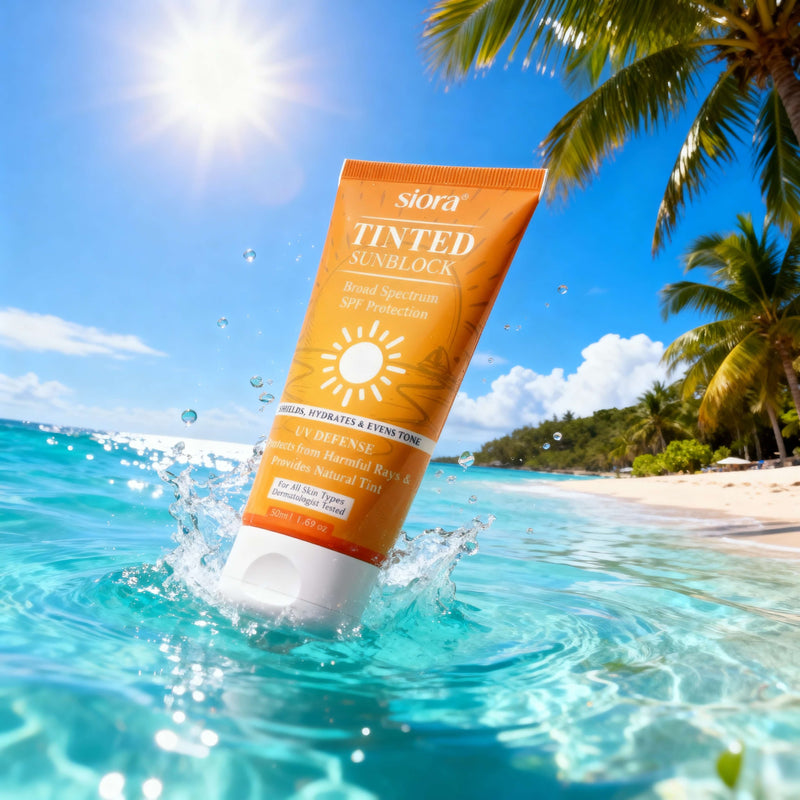
Siora's Sun Block (Protect, Matte, Prevent) checks every box here: a tinted SPF 50 PA+++ mineral sunscreen with a matte finish, no white cast, and a non-comedogenic base, all at Rs 1,490. One tube lasts 2 to 3 months with daily use, which makes it an easy buy for a daily routine. For a full breakdown by skin type, see our guide to the best sunblock for every skin type.
How to use a tinted sunblock
Sunscreen only works at the right amount, applied at the right time. Here's the routine:
- Finish your skincare first. Cleanse, apply serum, and moisturize. Sunblock is always the last skincare step before makeup.
- Measure two fingers. Use the two-finger rule: squeeze a line of sunblock along your index and middle fingers. That's the right amount for face and neck. Less than that and you don't get the SPF on the label.
- Spread evenly. Dot it across your forehead, cheeks, nose, and chin, then blend out so the tint matches your complexion. Don't forget your ears and the back of your neck.
- Let it set. Give it a minute to set to a matte finish before makeup. The tint means many people skip foundation entirely.
- Reapply. Reapply every 2 to 3 hours of sun exposure. Over makeup, press a fresh layer on with clean fingers or use a powder or stick sunscreen so you don't disturb your base.
Tinted vs untinted sunblock
Both protect from UV, but they're not equal for oily, acne-prone skin or uneven skin tones.
- White cast: Untinted mineral sunblock can leave a white cast. A tinted formula blends into your skin tone, so there's no grey film. This is the biggest reason people switch.
- Visible light: The iron oxides in a tinted sunscreen add visible-light protection that untinted versions miss, a real edge against hyperpigmentation and dark spots.
- Coverage: A tint evens your complexion and softens redness, so a tinted sunblock doubles as light, no-makeup coverage. Untinted gives you none.
- When untinted wins: If you want zero color under full makeup, an untinted SPF is fine. For everyone else, tinted is the better daily choice.
A Tint That Suits Your Complexion
Because a tint blurs minor imperfections, it softens the look of pores, redness, and uneven patches without the weight of foundation. Match the shade to your complexion and the tinted sunscreen melts in, while an untinted formula can still flash grey in photos. That blurring is why so many people treat a tinted sunblock as skincare and light makeup in one.
For oily and acne-prone skin, a matte tinted sunblock SPF 50 is the stronger all-round pick: broad-spectrum protection, oil control, and an even complexion in one lightweight step.