

Key Takeaways
What a Retinoid Is and When to Start
Retinol is a vitamin A derivative, a type of topical retinoid that speeds up skin cell turnover, supports collagen production, and softens the appearance of fine lines and wrinkles over time. Because it works on so many fronts, people often ask when they should introduce retinol. The honest answer is that there is no single right age. Most dermatologists suggest the mid-to-late twenties as a sensible time to start using retinol, since that is when natural collagen production begins to slow and the earliest fine lines appear. That said, plenty of people start using a retinol earlier to manage acne or uneven texture, and others begin later for anti-aging. What matters more than age is how you introduce retinol and whether your skin barrier is healthy enough to handle an active ingredient.
If your skin is currently irritated, sunburned, or mid-breakout, wait until it settles before you add a new retinol product. An over-the-counter retinol serum is gentle enough for most beginners, but as a vitamin A derivative it is still a potent active, so a calm starting point sets you up for fewer side effects of retinol down the line. You will also see this ingredient in different textures: a lightweight retinol serum absorbs fast and layers easily, while a richer retinol cream feels more cushioning and doubles as a night cream for drier skin. Whether you choose a retinol serum or cream comes down to your skin type and preference, since both deliver the same active. For the bigger picture on what this ingredient does and why it works, our retinol serum beginner's guide covers the science in more depth.
The Beginner Frequency Schedule: A Week-by-Week Ramp
How often to use retinol is the question that trips up most beginners. Go too fast and you invite redness, flaking, and the dreaded purge. The fix is a slow ramp. The table below maps out a gentle eight-week schedule for retinol for beginners. Listen to your skin: if a week feels rough, repeat it before moving on rather than pushing ahead.
| Weeks | How Often to Apply | What to Watch For |
|---|---|---|
| Weeks 1-2 | 2 nights per week (e.g. Monday and Thursday) | Mild tingling is normal. Let your skin acclimate before doing more. |
| Weeks 3-4 | 3 nights per week, with a rest night between each | Watch for dryness. Buffer with moisturizer if your skin feels tight. |
| Weeks 5-6 | Every other night | Most people see smoother texture starting here. Keep up your SPF. |
| Weeks 7-8+ | Nightly, only if your skin tolerates it well | Many people are happy staying at every other night long term. |
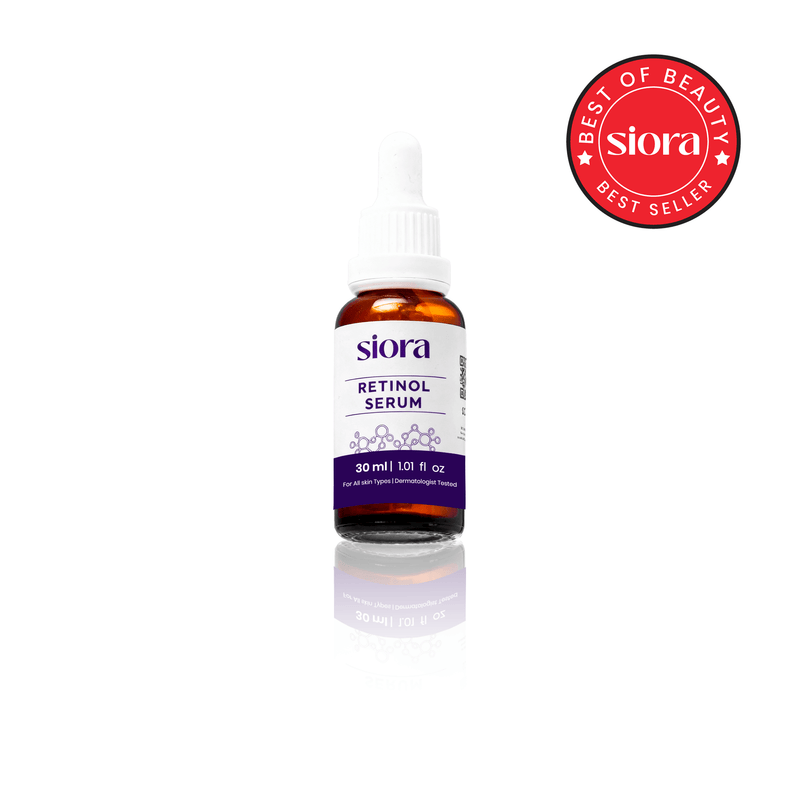
There is no prize for reaching nightly use. If every other night keeps your skin happy and clear, that frequency is perfectly fine to stick with. Siora's Retinol Serum (Renew, Smooth) is formulated for this kind of gradual build, and using it 2-3x a week is enough to see results without overwhelming your barrier.
How to Introduce Retinol Into Your Skincare Routine
Knowing how to apply retinol is just as important as how often, and the goal is to slot it into your existing skincare routine without disruption. The technique below is the sandwich method, where you cushion your retinol between layers of moisture so it works without drying you out. This buffering approach to retinol application is especially helpful for retinol for sensitive skin and for beginners.
The Sandwich Method, Step by Step
- Cleanse and wait. Wash your face, then wait until your skin is completely dry. Applying retinol to damp skin pushes it in faster and raises the risk of irritation. This is part of why people are told to wait before they apply retinol.
- Apply a light moisturizer or hyaluronic acid serum first. This is the bottom slice of the sandwich. A thin buffer layer slows absorption and protects your barrier. A hyaluronic acid serum works beautifully here because it draws water into the skin to hydrate without blocking the retinol.
- Apply a pea-sized amount of retinol. That really is enough for your whole face. Dot it on your forehead, cheeks, and chin, then spread gently. More product does not mean faster results; it just means more dryness.
- Avoid the danger zones. Keep retinol away from the corners of your eyes, your nostrils, and the corners of your mouth, where skin is thin and prone to irritation.
- Seal with moisturizer. The top slice of the sandwich. A final layer of moisturizer locks everything in and keeps your skin comfortable overnight.
That whole topical retinol routine takes under two minutes once it becomes a habit, and the sandwich method makes a real difference in how your skin tolerates the ingredient.
What to Pair and What to Avoid
Retinol plays well with calming, hydrating ingredients but clashes with other strong actives. Layering it with the wrong things is one of the fastest ways to over-irritate your skin, so a few simple rules keep your retinol routine safe.
- Skip vitamin C at the same time. Both retinol and vitamin C are powerful, and using them together can leave skin raw. The standard fix is to split them: vitamin C in the morning for antioxidant protection, retinol at night. That way you get the benefits of both without piling acid and retinol onto your face at once.
- No AHA or BHA on the same night. Exfoliating acids like glycolic (AHA) or salicylic acid (BHA) already accelerate cell turnover. Stacking them with retinol on the same night is too much and can damage your barrier. Alternate them on different evenings instead.
- Do pair with hyaluronic acid and gentle moisturizers. These hydrate and soothe, which is exactly what retinol-treated skin needs.
- Go easy on benzoyl peroxide. It can deactivate some retinol formulas, so keep them in separate routines if you use both for acne.
Managing Irritation, Purging, and Dryness
Purging is the temporary uptick in breakouts some people notice in the first few weeks of using a retinol. It happens because faster skin cell turnover brings clogs to the surface sooner than they would have appeared on their own. A true purge tends to show up in areas you normally break out and clears within four to six weeks. If you are getting new breakouts in places you never break out, that is more likely irritation than purging, and it is a sign to slow down.
Dryness, flaking, and a little redness are the other common side effects of retinol early on. To keep them in check: drop back to fewer nights per week, lean on the sandwich method, and add an extra layer of moisturizer or a hyaluronic acid serum on the nights between. Avoid scrubs and other harsh products while your skin adjusts. If you have very sensitive skin and the irritation is constant rather than mild, pause for a week, let your barrier recover, then restart at a lower frequency. Patience beats pushing through.
The Morning-After SPF Rule
This step is not optional. Retinol increases skin cell turnover, which leaves fresh, newer skin at the surface that is more vulnerable to UV damage. Skipping sunscreen does not just risk a burn; it undoes the anti-aging work you are doing, since UV exposure breaks down collagen and deepens fine lines and dark spots. So every morning after you apply retinol, and ideally every single day, finish your routine with a broad-spectrum SPF 30 or higher. Treat it as the partner step to your retinol: retinol at night, sunscreen in the morning. Our guide to the best sunblock for every skin type helps you find one that layers cleanly over your other skincare and suits your skin type.