

Key Takeaways
What Niacinamide (Vitamin B3) Is
Niacinamide is a form of vitamin B3, also known as nicotinamide. Niacinamide is a water-soluble vitamin, which means it dissolves in water rather than oil and absorbs quickly without leaving a greasy film. Your body cannot store it, so a serum is a practical way to deliver a steady dose right where you want it. The everyday niacinamide uses for skin range from oil control to fading marks, so a little context helps before you start.
So how does niacinamide help skin, and why is it best when bottled in serum form? A serum is a concentrated, thin-textured formula built to carry active ingredients deeper than a thick cream can, which makes it the ideal vehicle. Decades of dermatological research have studied how this single vitamin supports the skin in several ways at once, from oil regulation to barrier repair. Curious about niacinamide but unsure where it fits? It plays nicely with almost everything, so it is an easy first step into a deliberate skin care routine.
The Core Benefits of Niacinamide for Skin
This is where the ingredient earns its reputation. These skin benefits of niacinamide are backed by well-established research and years of use, and together they improve skin from oil control to tone.
1. Oil and Sebum Control
If your face looks shiny by midday, your sebaceous glands are likely producing more oil than you need. Niacinamide helps moderate that output. Research on niacinamide for oily skin has shown a measurable drop in sebum production with consistent use, which means a less greasy feel and fewer clogged pores. For oily skin and combination skin, this is usually the benefit people notice first.
2. Minimizing the Look of Pores
Pores do not actually open and close, but they can look larger when stretched by trapped oil and debris. By keeping sebum in check and improving overall skin texture, niacinamide for pores helps reduce the appearance of those enlarged-looking spots, so skin reads as smoother and more refined.
3. Fading Dark Spots and Uneven Tone
Niacinamide interrupts the transfer of pigment to the surface of your skin, which is how it helps fade dark spots and uneven skin tone over time. People dealing with post-acne marks or general dullness often find it brightens skin into a more even, radiant skin appearance. If brightening is your main goal, see how vitamin C serum benefits compare, since the two target tone in different ways.
4. Strengthening the Skin Barrier
Your skin barrier is the outermost layer that locks in moisture and keeps irritants out. Niacinamide encourages your skin to produce more ceramides, the lipids that hold that barrier together. A stronger barrier means skin stays hydrated longer and recovers faster, which is a big reason niacinamide can help dry skin and irritated skin feel comfortable, not just oily complexions.
5. Softening Fine Lines
A resilient, well-hydrated barrier naturally makes fine lines look less obvious. Niacinamide supports this by keeping the skin plump and improving elasticity over time. It is not a wrinkle eraser, but as part of a consistent routine it contributes to healthy skin that looks smoother over time. For a fuller picture of how serums fit a routine, see our complete guide to face serums.
Niacinamide Uses for Skin: Concerns It Targets
Because it works on several fronts at once, niacinamide quietly handles a long list of common skin issues. It helps regulate oil for oily and acne-prone skin, supports a smoother surface that improves skin texture, and works to restore the skin after breakouts or sun stress. By topping up ceramides it helps hydrate the skin and reinforces the lipids that protect your skin barrier, which is also what keeps moisture from escaping. Over weeks of steady use, many people notice clearer, more glowing skin and a more even tone. Because the formula stays gentle, it is suitable for sensitive skin as well as resilient complexions, so the use of niacinamide rarely triggers a reaction. That broad range of skin conditions it can ease is exactly why this one vitamin shows up in so many routines.
What Percentage of Niacinamide to Look For
More is not always better with this ingredient. The sweet spot for most people sits between 2% and 5%, where you get strong results with very little risk of irritation. Higher concentrations exist but do not always perform better, and they can feel less comfortable on sensitive skin.
| Concentration | Best For | What to Expect |
|---|---|---|
| 2% | Sensitive skin, beginners, dry skin | Gentle barrier support and hydration with minimal risk of reaction. A safe starting point. |
| 5% | Most skin types, oily and combination skin | The research-backed sweet spot. Strong oil control, tone, and pore benefits while staying comfortable. |
| 10% | Experienced users with very oily, resilient skin | Higher potency, but a greater chance of tingling or dryness. Often unnecessary for everyday results. |
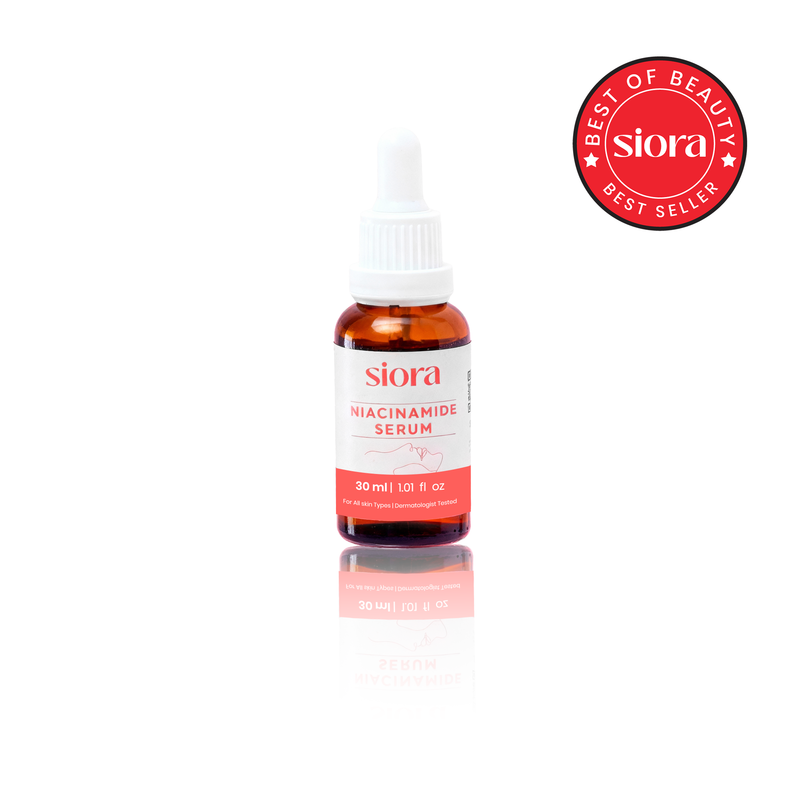
Siora's formulation team built our Niacinamide Serum (Balance Oil, Refine Pores) in this well-tolerated range so it works for daily use across skin types without overwhelming your barrier. At Rs 1,390, it is an easy addition to a working routine.
From Oily Skin to Sensitive Skin: Who It Suits
Part of why this ingredient is so popular is that it is genuinely suitable for all skin types. Here is how a niacinamide product behaves depending on your skin concern.
- Oily skin: The standout candidate. Niacinamide for oily skin tackles shine, sebum, and the clogged pores that come with it.
- Combination skin: Balances oily zones without drying out the rest, evening skin texture across the face.
- Dry or dehydrated skin: Supports ceramides and helps the skin hold water, so it pairs beautifully with a moisturizer.
- Sensitive skin: Many people with sensitive skin avoid strong actives for fear of irritating their skin. Niacinamide is one of the calmest options out there, which makes it a reassuring place to start.
- Acne-prone skin: Can niacinamide help with acne and blemishes? Yes, by reducing oil and calming inflammation it helps fewer breakouts form and supports clearer skin over time.
How to Apply Niacinamide Serum in Your Skincare Routine
Knowing how to apply niacinamide serum is half the battle. It is forgiving, but a little structure helps it sit well inside your skincare routine.
- Cleanse and pat dry. Start clean so the serum absorbs evenly.
- Apply niacinamide serum. Press two to three drops over your face and neck. You can use it morning, evening, or both.
- Layer thoughtfully. Niacinamide and hyaluronic acid are a natural pair: apply hyaluronic acid first to draw in water, then niacinamide to support the barrier, then moisturizer to seal everything in.
- Mind your vitamin C timing. Niacinamide and vitamin C behave well together in modern formulas, but if your skin is sensitive you can use vitamin C in the morning and niacinamide at night.
- Always finish with SPF in the daytime. Brightening actives work best when you are not adding new sun damage on top, so daily sunscreen protects your progress. Our guide to the best sunblock for every skin type covers how to pick one that fits over your actives.
Used this way, niacinamide slots quietly into almost any skincare routine.
Niacinamide vs Vitamin C
These two get compared constantly because both improve tone and brightness. They are not rivals; they approach skin health from different angles, and many routines use both.
| Niacinamide | Vitamin C | |
|---|---|---|
| Main job | Oil control, pores, barrier strength, even tone | Antioxidant defense and brightening |
| Best for | Oily, combination, sensitive skin | Dullness and environmental protection |
| Stability | Very stable and easy to use | More sensitive to light and air |
| When to apply | Morning or night | Usually morning, before SPF |
If you want both, our Vitamin C Serum (Brighten, Protect) pairs well with a niacinamide step in the same routine: vitamin C to protect and brighten skin in the day, niacinamide to balance and strengthen.
Side Effects, Skin Conditions, and Who Should Be Cautious
Niacinamide is one of the most tolerable actives in skin care, and serious side effects are rare. At very high concentrations some people feel mild tingling, flushing, or temporary dryness, which is one more reason to stay in the 2% to 5% range. If your skin is reactive, patch test on your inner arm for a couple of days before applying niacinamide to your whole face.
Introduce it slowly if you already run several other skin care products. Pregnant or breastfeeding readers, or anyone managing a specific skin condition, should check with a qualified professional before adding any new ingredient. For most people, niacinamide is a low-risk, high-reward addition that earns its place quickly.